

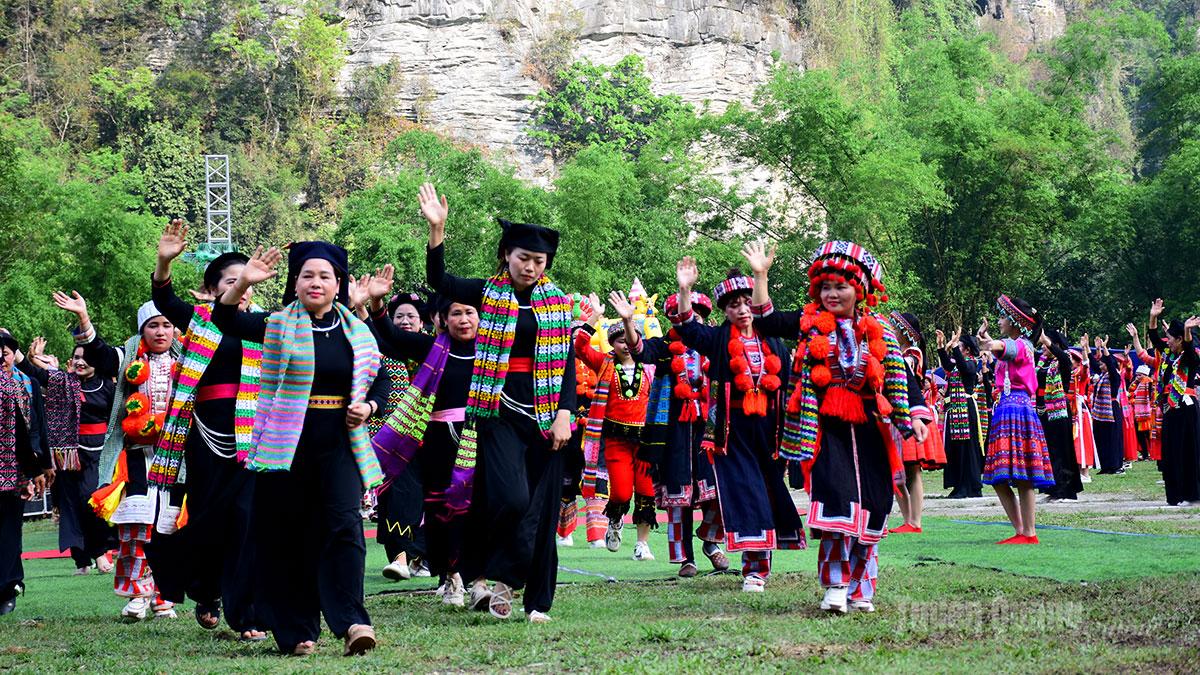
The colorful cultural mosaic reflected through the traditional attire of local ethnic communities
The Unique "Stealing for Luck" Custom of the Lo Lo People
In the heart of the Karst Plateau, the New Year’s Eve of the Lo Lo people is enlivened by the "Khu Mi" custom - literally translated as "stealing for luck." According to Lo Lo belief, bringing home a small item at the stroke of midnight will ensure a year of prosperity and bountiful harvests.
However, this "theft" is governed by strict rules: participants may only take items of nominal value that symbolize life and vitality - such as an onion, a garlic bulb, a vegetable, or a small piece of firewood. Stealing items of significant value is strictly forbidden. "Khu Mi" is not a game of win or loss; rather, it is a humane cultural tradition of Spring, reflecting the highlanders' profound yearning for a peaceful and prosperous new year.
"Nhang Cham" - The Gratitude Ritual of the Dao People
The Dao ethnic community observes a remarkably unique year-end ceremony known as the "Nhang Cham" ritual - also called the Year-End Gratitude Ceremony or the Final Year Festival. This event typically takes place from the beginning of the twelfth lunar month until New Year's Eve. It is the most significant occasion for families to perform rituals for warding off ill fortune, cleansing the misfortune of the past year, and expressing deep gratitude to their ancestors, Ban Vuong, and the guardian deities who have provided protection throughout the year.
The Culinary "Taboos" of the Mong People
The Lunar New Year of the Mong community is steeped in strict and unique taboos, profoundly reflecting their beliefs in praying for bountiful harvests and worshiping deities. The most rigorous "laws" involve their culinary practices on the first day of the New Year, whereby the Mong festive tray remains conspicuously devoid of soup and green vegetables throughout the three days of Tet. According to Mong belief, consuming rice with soup would cause excessive rainfall, leading to floods and crop failures, while abstaining from green vegetables signifies a prayer for a prosperous and abundant year. Instead, families gather around meticulously prepared pork and chicken dishes, along with the indispensable Banh Day (Round Glutinous Rice Cake) - a sacred symbol of the Sun and the Moon.
The Tay People: Carrying "Luck" from the Sacred Source
As the first cockcrow signals the arrival of New Year’s Day, the Tay community eagerly observes a beautiful tradition: fetching the first water of the year. The head of the household or a healthy family member carries bamboo tubes along with incense and joss paper to the local stream or headwater. There, they perform a respectful ritual, seeking permission from the Deity of the Stream and the Earth Deity to collect the purest water - symbolizing the source of prosperity for the coming year.
On their journey home, the water-fetcher also gathers a small budding branch and picks 12 pebbles (representing 12 months of abundance). The fresh water is then solemnly placed before the ancestors' altar. This custom not only expresses gratitude toward nature but also reinforces the belief in favorable weather and bountiful harvests.
The Unique New Year Vegetarian Meal of the San Diu People
On the morning of the first day of the Lunar New Year, while most households gather around savory feasts, the San Diu (San Chi) community quietly welcomes Spring with a serene vegetarian meal. This unique spiritual tradition creates a rare and profound contrast to the customs of other ethnic groups.
According to traditional customs, the first morning of Tet is dedicated to worshiping Buddha and ancestors with offerings consisting solely of "chao che" (a sweet porridge made from glutinous rice, mung beans, and sugar) instead of chicken or pork. Following the ritual with five incense sticks - praying through the cycles of "prosperity, decline, misfortune, and peace" - the entire family enjoys this sweet, wholesome porridge together. This practice of early-year vegetarianism expresses deep respect and a yearning for a peaceful, tranquil year while avoiding sentient harm. It is not until the morning of the second day of Tet that the San Diu officially prepare a sumptuous savory banquet, marking this as their "Main Tet" celebration.
Nguyen Thanh Hieu
Vietnamese source: Tuyen Quang online
