Transport Planning within the New Strategic Space
Effective July 1, 2025, a completely new developmental horizon for Tuyen Quang was unveiled, doubling its potential across economics, culture, tourism, agriculture, and national defense. In 2025, the province’s industrial production value reached over 33 trillion VND - a 20% increase year-on-year. Import-export turnover surpassed 1 billion USD, exceeding the annual target by 30% and nearly doubling the previous year's performance. Additionally, tourist arrivals reached nearly 4 million, generating total revenue of over 10 trillion VND - far exceeding set goals. These milestones underscore the surging demand for transport, logistics, and market connectivity, making high-quality infrastructure a fundamental prerequisite.
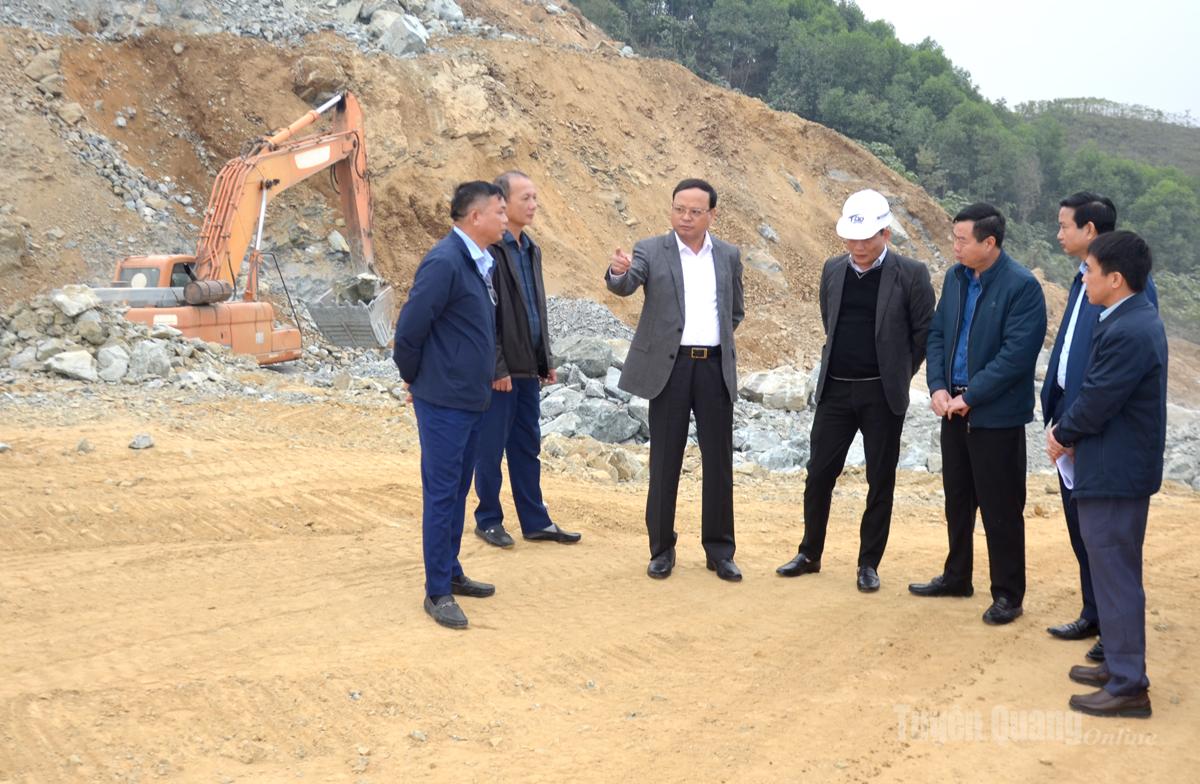
Mr. Nguyen Manh Tuan, Member of the Standing Committee of the Provincial Party Committee and Permanent Vice Chairman of the Provincial People's Committee, inspects the construction progress of the Tuyen Quang - Ha Giang Expressway project
To maximize potential and effectively manage its vast and diverse topography, the province has developed a Revised Master Plan following the merger. Within this framework, the transport infrastructure system is slated for modern and integrated development - ensuring seamless connectivity from the lowlands to the highlands, and from administrative centers to border areas. This infrastructure will serve as both the cornerstone and the key catalyst for the province’s growth in this new era.
Expressway Construction - Creating a Connectivity Axis from Lowlands to Highlands
Over the recent years, a series of expressway projects have been launched, completed, or prepared for investment across the province. These initiatives aim to establish a seamless connectivity axis linking the lowlands to the highlands and the provincial administrative center to its districts.
The 40km Tuyen Quang - Phu Tho Expressway, commissioned in late 2023, has significantly reduced travel time from Hanoi to the provincial capital. By easing traffic on National Highway 2, it serves as a vital transport artery for the province’s industrial and commercial sectors. This expressway not only helps businesses cut transportation costs but also creates favorable conditions for attracting investment into industrial zones and clusters.
The Tuyen Quang - Ha Giang Expressway project (Phase 1) - a two-lane scale development with a total length of 104.5 km - was jointly launched by the former Ha Giang and Tuyen Quang provinces in 2023. This stands as the most pivotal infrastructure project for the province following the merger. On December 19, 2025, a section of the project was opened to technical traffic. In 2026, once this vital artery is officially commissioned and operational, it will significantly shorten travel time from the provincial capital to northern communes and wards - creating new momentum for the development of agriculture, services, and cross-border trade.
Phase 2 of the Tuyen Quang - Ha Giang Expressway - extending from the Phase 1 terminus to the Thanh Thuy International Border Gate - is expected to commence construction this year. This project will establish a seamless corridor from Hanoi to the Thanh Thuy International Border Gate, bolstering the border-gate economic infrastructure, driving import-export activities, and creating optimal conditions for the province’s transport, trade, and tourism sectors.
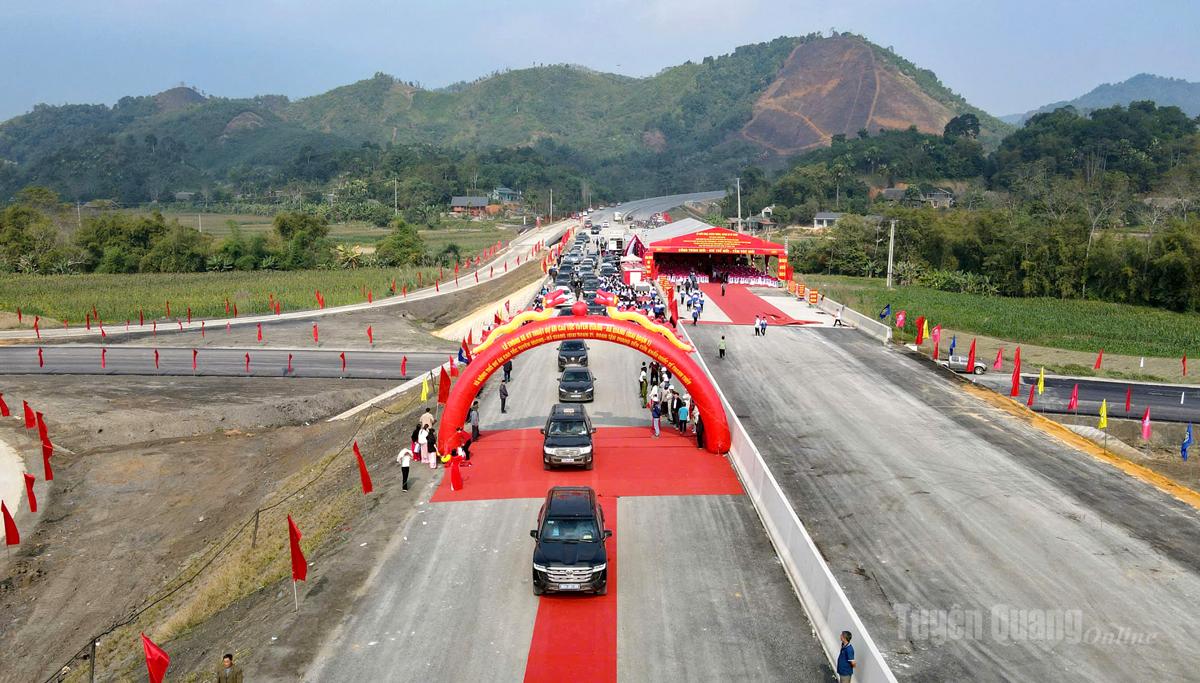
The first convoys roll out as the Tuyen Quang - Ha Giang Expressway is technically opened to traffic
The "Key" to Development
Experts point out that Tuyen Quang’s fragmented terrain and expansive area inevitably lead to higher construction and maintenance costs. Furthermore, the province’s budget remains largely characterized by fiscal dependence on central government allocations. Consequently, it is essential to mobilize diverse funding sources for road investments - ranging from national highways to inter-commune routes. Simultaneously, strengthening oversight in both investment and post-operation management is crucial to maximizing the effectiveness of transport projects and initiatives.
Once the province’s transport infrastructure is seamlessly integrated - meeting the trade demands from the lowlands to the highlands and from the administrative capital to the remote borderlands - it will become a powerful driver for socio-economic growth. This transformation will not only enhance the people's quality of life but also transform Tuyen Quang into a vibrant province of development within the Northern Midland and Mountainous region.
Nguyen Thanh Hieu
Vietnamese source: Tuyen Quang online