At a forest spirit worship ceremony of the Nung people in Thuy Lam Village, Linh Ho Commune, the sound of bells rings out across an open clearing at the entrance to the village. Two men stand inside separate bamboo hoops, each with a brightly coloured paper horse head in front of him - one pink, the other green.
Keeping time with their steps, the two horses move towards each other, bring their heads together, then draw apart. At times, they move slowly and leisurely, as if grazing on grass; at others, their movements become forceful and rapid, as though they are striving to overcome an obstacle in the mountain forest. Small bells around their necks ring out in a continuous rhythm. The dancers gesture with their hands, shift their steps, bow to each other, challenge one another, then come together again. For a moment, the paper horses seem to spring to life, animated by the dancers’ movements, breathing and emotions.
The paper horse is far more than an inanimate creation of bamboo and coloured paper. It holds layers of the community’s cultural memory. Its role becomes particularly important in ritual practices, especially funeral rites. In Nung belief, death is not the end, but the beginning of a new life in the world beyond. The paper horse serves as a symbolic means of conveying offerings, everyday belongings and material possessions to the realm of the dead. The dance is therefore not simply an act of farewell, but also an expression of gratitude and filial devotion towards the deceased.
The paper horse dance is also associated with important ceremonies among the Nung Din, including village worship, prayers for peace and well-being, thanksgiving rites and funeral observances. These practices reflect the community’s deep-rooted faith in the protection and blessings of deities and ancestors.
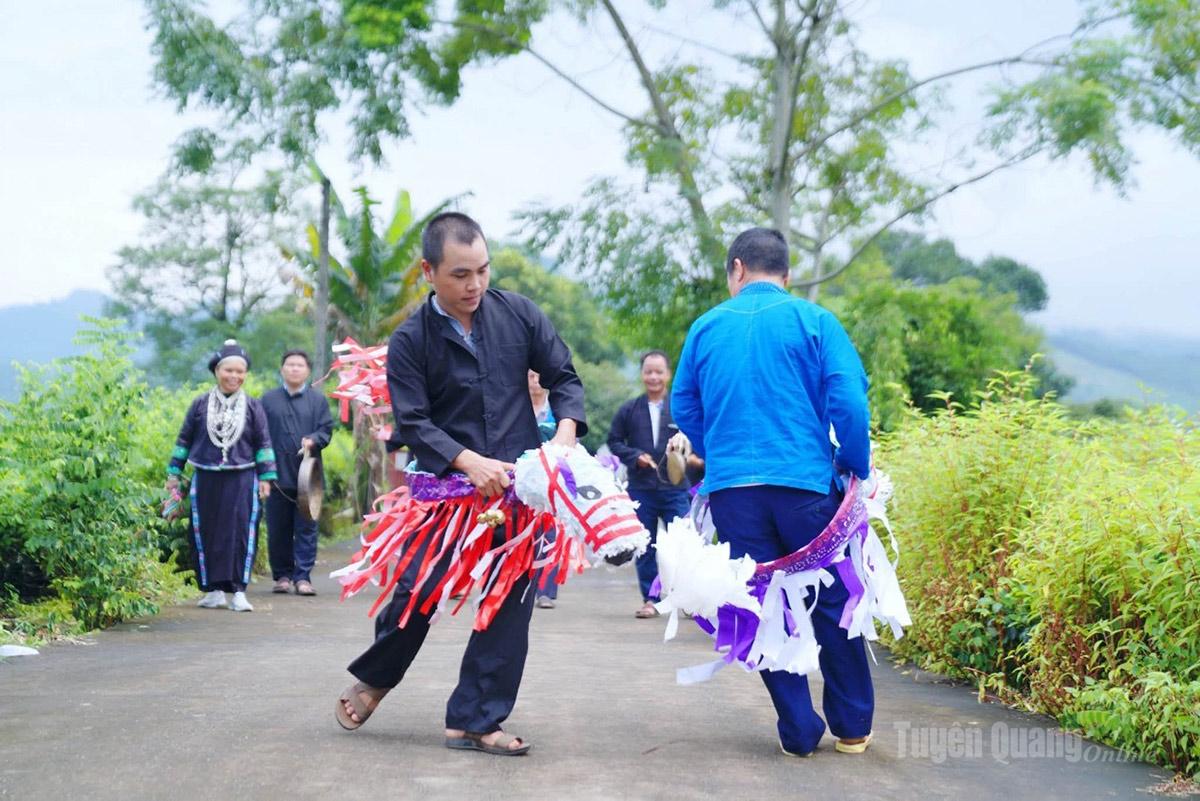
Nung people in Linh Ho Commune perform the paper horse dance
From sacred ritual settings, the paper horse dance has gradually become part of wider community life. It is performed at National Great Unity Day celebrations, traditional festivals, Lunar New Year festivities, cultural exchange events and community arts performances. This broader presence has not diminished the tradition’s original significance. Rather, it has created more opportunities for the community to practise the dance, share it with wider audiences and pass it on to future generations. Once associated with pivotal moments in people’s lives, the paper horse has become an integral part of village cultural life.
Some cultural traditions are preserved not in books, but through memories and a sense of pride passed from one generation to the next. The Nung people’s paper horse dance is a living expression of the bonds between community, spiritual belief, artistic expression and cultural identity. Once part of the rites of farewell to the dead, the paper horse has become a cultural symbol of the community as a whole. Each time the paper horses prance, memories stir; each time their bells ring out, the story of the Nung people continues to unfold.
Nguyen Thanh Hieu
Source: Tuyen Quang online